.webp "Christmas")
.webp "Christmas")
How Does a Centralized Airline Data API Improve Real-Time Flight Data Accuracy?
Introduction
In today’s highly competitive aviation and travel marketplace, seamless access to flight data is critical for both businesses and travelers. From comparing fares and availability to analyzing route schedules, the industry demands a unified system that provides consistent and real-time information. A Centralized Airline Data API allows travel companies, airlines, and data platforms to integrate flight, fare, and availability data from multiple sources into one accessible interface. When combined with a Global Flight Price Trends Dataset, businesses can gain invaluable insights into global pricing fluctuations, seasonal trends, and customer behavior. This is further strengthened by the ability to Scrape real-time airline fare data, enabling stakeholders to remain agile and responsive to market changes as they occur.
The Importance of a Centralized Airline Data API
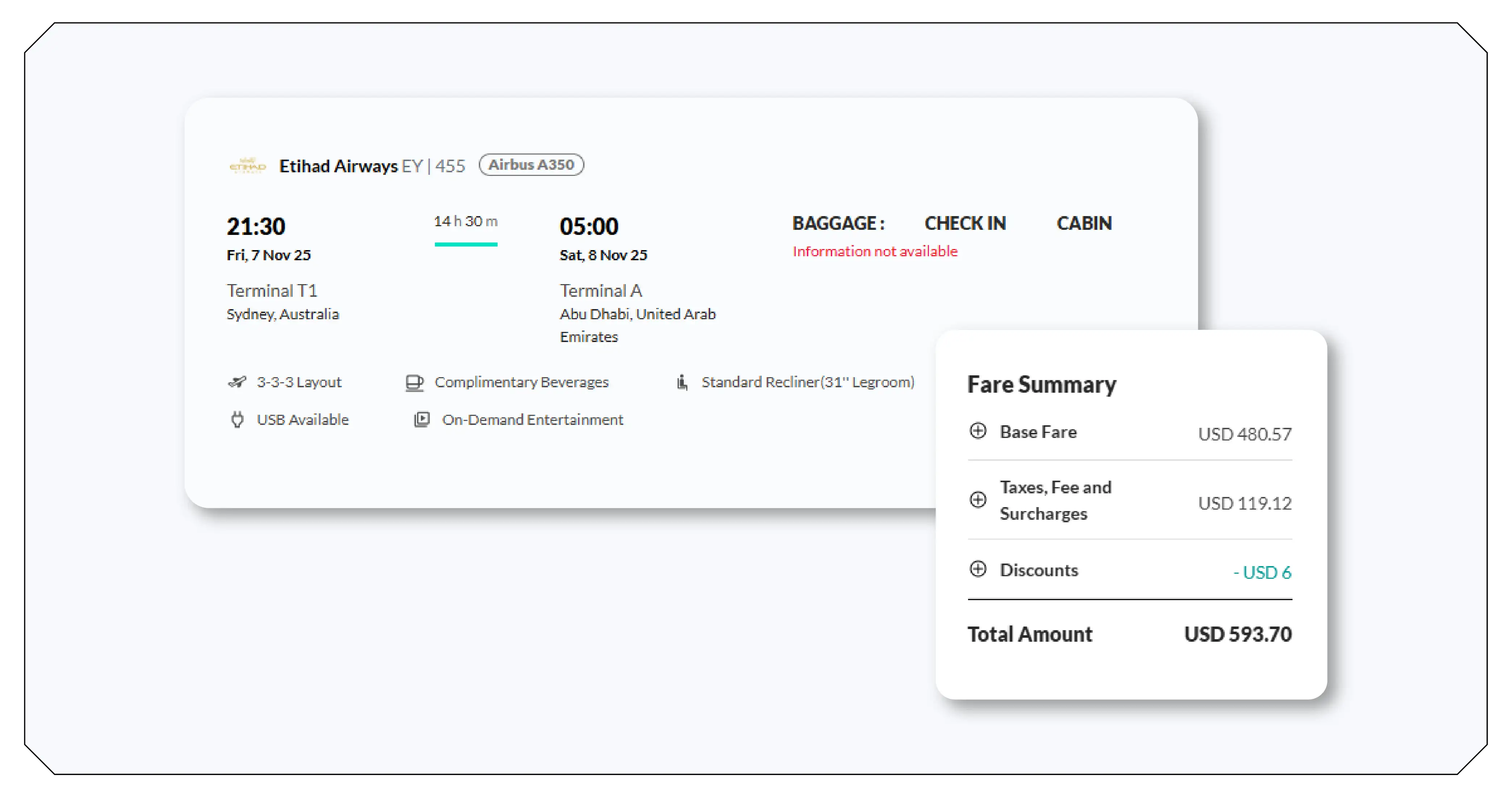
The aviation ecosystem has evolved beyond static pricing and manual updates. Airlines continuously modify their fares based on factors like demand, seat availability, and competition. OTAs, travel aggregators, and price comparison engines need access to accurate and updated information to serve customers effectively.
A Centralized Airline Data API consolidates this information, ensuring that travel platforms can display flight details, fare options, and schedule updates without relying on multiple independent sources. This approach not only saves time but also improves accuracy and operational efficiency. Businesses leveraging Airline Data Scraping Services gain a competitive edge by automating the data collection process and maintaining up-to-date information across all connected systems.
How Centralized APIs Transform Airline Data Access?
A unified airline data API revolutionizes the way flight information is collected, organized, and delivered. It acts as a bridge between disparate airline systems, online travel agencies, and global distribution systems (GDS).
By implementing Web scraping Flight data availability tools, APIs can extract essential flight information — such as seat availability, route timings, and class options — across multiple carriers. This allows businesses to provide accurate search results, generate instant pricing comparisons, and enhance user satisfaction. The result is a dynamic ecosystem where data synchronization ensures that every flight option displayed is reliable and up to date.
Benefits of a Centralized Airline Data API
- Real-Time Fare Updates
Airline fares are highly dynamic, influenced by demand, time of booking, and competitor pricing. A centralized API collects and processes data from hundreds of airline sources, updating prices in real time. Businesses can avoid inconsistencies and ensure that customers see the latest and most accurate fares. - Simplified Data Management
Managing multiple airline connections can be complex and costly. With a centralized interface, businesses can handle thousands of routes, flights, and fare classes seamlessly, ensuring efficient integration without manual intervention. - Improved Customer Experience
Accurate data leads to trust. When customers find consistent prices and real-time flight details, they are more likely to complete bookings. This fosters brand loyalty and enhances user engagement. - Scalability Across Regions
Global coverage is a must for any travel business. By utilizing a Global Flight Schedule Dataset, companies can expand operations across markets and offer services for multiple airlines worldwide. APIs allow scalability by automating the data flow and ensuring regional consistency. - Enhanced Monitoring and Analytics
Data APIs don’t just provide information — they empower analysis. Using an Airline data schedule monitoring API, businesses can track route changes, flight frequencies, and on-time performance metrics. These insights support data-driven decisions for optimizing schedules, managing codeshare partnerships, and predicting demand.
Applications of Centralized Airline Data APIs
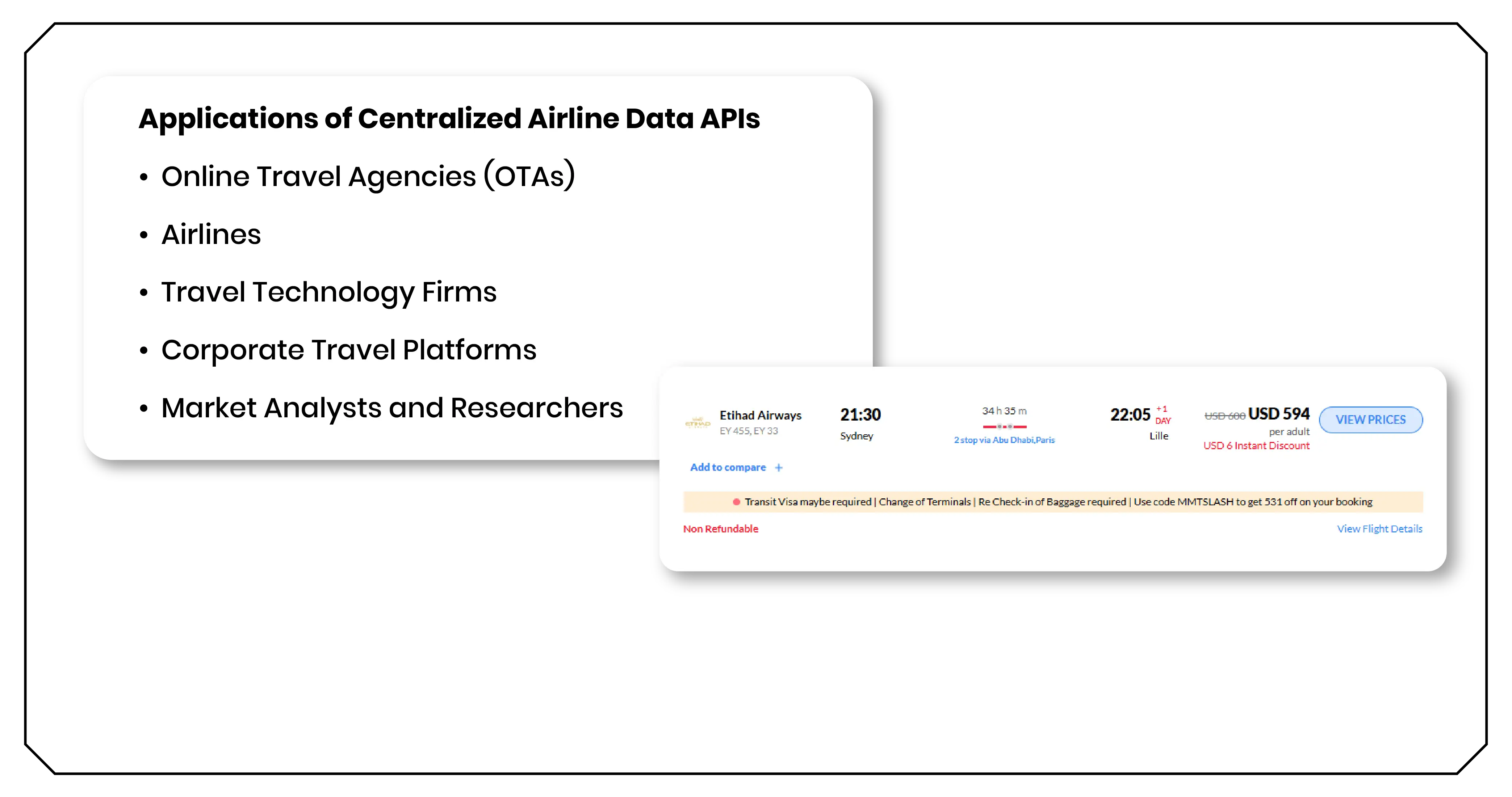
Centralized APIs cater to a variety of industries and business models.
- Online Travel Agencies (OTAs): They use APIs to provide real-time fare comparisons and itinerary customization.
- Airlines: They integrate data APIs to monitor competitors and enhance revenue management.
- Travel Technology Firms: They develop dashboards and forecasting tools using aggregated flight data.
- Corporate Travel Platforms: They rely on APIs to manage bookings and optimize costs.
- Market Analysts and Researchers: They use large datasets for trend prediction and consumer behavior analysis.
The integration of a Flight Data Aggregation API ensures a seamless data flow that supports these diverse applications and delivers standardized outputs for further analytics and forecasting.
Extracting and Centralizing Flight and Fare Data
The process to Extract Centralized Flight and Fare Data involves connecting multiple airline and OTA endpoints through a unified pipeline. APIs and scraping frameworks gather essential data points such as:
- Flight schedules and operational routes.
- Seat availability and class distribution.
- Fare categories, restrictions, and refund rules.
- Real-time price changes and historical trends.
This aggregated data is then structured into an accessible format for analysis, visualization, or integration into booking platforms. Businesses that centralize flight data gain a comprehensive view of the aviation landscape, enabling them to predict price shifts, identify new routes, and align offerings with consumer demand.
Advantages for Different Stakeholders
- For Airlines
They gain a broader understanding of market trends and competitor pricing, allowing for dynamic fare adjustments and improved revenue management. - For OTAs and Aggregators
They can display real-time data for customers, minimizing booking errors and price mismatches, while offering transparent and up-to-date search results. - For Travel Data Analysts
Analysts use aggregated APIs to study flight operations, predict seasonal fare patterns, and build predictive pricing models. - For Customers
Travelers benefit from consistent and transparent information, ensuring a smooth and reliable booking experience.
Technical Edge of Centralized APIs
A Centralized Airline Data API relies on cloud-based integration, ensuring data is updated instantly as new information is released by airlines or OTAs. Modern APIs also support:
- High scalability: Managing millions of requests per minute.
- Data normalization: Standardizing outputs across different airline formats.
- Machine learning integration: Predicting fare fluctuations and demand surges.
- Error handling: Maintaining uptime even during high-traffic periods.
These features ensure that businesses stay connected to a continuous stream of verified flight and fare data.
Challenges and Solutions
Despite the immense benefits, implementing a Centralized Airline Data API requires addressing key challenges:
- Data Accuracy: APIs must ensure synchronization between multiple sources to prevent outdated fare displays.
- Integration Complexity: Airlines and OTAs often use different data structures; APIs must normalize these efficiently.
- Regulatory Compliance: Travel data collection must adhere to privacy and anti-scraping regulations.
- Real-Time Updates: Maintaining latency-free data transfer is crucial for accurate fare comparison.
Solutions include using scalable cloud servers, adaptive APIs, and AI-based validation systems that ensure quality and compliance in every data exchange.
The Future of Airline Data Centralization
As artificial intelligence and automation reshape travel technology, centralized APIs are becoming the backbone of the aviation ecosystem. Future developments will likely include:
- Predictive algorithms for fare forecasting.
- Integration with ancillary services like baggage, meals, and upgrades.
- Blockchain-based flight data verification systems.
- Unified APIs combining flight, hotel, and car rental data for complete travel management.
These advancements will further streamline the travel experience for businesses and consumers alike.
How Travel Scrape Can Help You?
- Gain Competitive Visibility Across Airlines and OTAs
Our flight data scraping solutions give you a clear view of real-time fares and availability across multiple airlines and online travel agencies. With this intelligence, you can benchmark performance, identify pricing gaps, and stay ahead in an increasingly competitive travel marketplace. - Automate Data Collection and Save Valuable Time
We eliminate the manual effort involved in tracking thousands of flight prices and schedules. Automated scraping ensures continuous, accurate, and structured data delivery — letting your team focus on strategy, not repetitive research tasks. - Detect Airfare Fluctuations Instantly
Airline fares change several times a day. Our technology captures these fluctuations as they happen, helping you adjust your pricing strategy, anticipate peak travel periods, and identify discount opportunities before competitors do. - Strengthen Analytics and Forecasting Capabilities
Our flight data scraping feeds your analytics platforms with clean, reliable, and comprehensive datasets. This empowers you to forecast demand trends, analyze route profitability, and design dynamic pricing models that enhance revenue outcomes. - Customize Insights for Business Growth
Every travel business is different. That’s why our scraping services are tailored to your goals — whether you need regional route data, global fare monitoring, or OTA comparison reports. We deliver flight data that aligns perfectly with your business objectives and growth plans.
Conclusion
The future of travel intelligence lies in unifying fragmented data sources into one reliable and dynamic system. Companies leveraging Flight Price Data Intelligence can enhance their ability to respond swiftly to market changes, ensuring their fare strategies remain competitive and profitable.
With Real-time airline route aggregation via API, businesses gain deep visibility into operational patterns, route expansions, and network efficiency.
Finally, analyzing the Airline Price Change Dataset empowers data scientists and revenue managers to forecast trends, optimize routes, and deliver cost-effective travel solutions. The Centralized Airline Data API is not just a technological innovation — it’s a strategic advantage for the modern travel ecosystem, driving accuracy, efficiency, and profitability in an ever-evolving global aviation market.
Ready to elevate your travel business with cutting-edge data insights? Scrape Aggregated Flight Fares to identify competitive rates and optimize your revenue strategies efficiently. Discover emerging opportunities with tools to Extract Travel Website Data, leveraging comprehensive data to forecast market shifts and enhance your service offerings. Real-Time Travel App Data Scraping Services helps stay ahead of competitors, gaining instant insights into bookings, promotions, and customer behavior across multiple platforms. Get in touch with Travel Scrape today to explore how our end-to-end data solutions can uncover new revenue streams, enhance your offerings, and strengthen your competitive edge in the travel market.