.webp "Christmas")
.webp "Christmas")
How Can Cruise Line Itinerary Dataset Scraping Transform Your Travel Business?
Introduction
In today’s data-driven travel industry, Cruise Line Itinerary Dataset Scraping has become a game-changer for cruise operators, travel agencies, and market analysts. By leveraging comprehensive datasets, businesses can gain actionable insights into cruise operations, customer preferences, and global travel trends. Alongside this, Cruise & Ferry Data Scraping Services offer a structured and automated approach to collecting vast amounts of itinerary and passenger information, reducing manual efforts and ensuring accuracy.
The combination of advanced scraping techniques and specialized datasets allows companies to understand patterns in cruise travel, optimize marketing strategies, and enhance customer experiences. For stakeholders aiming to stay ahead in a competitive market, embracing data-driven insights is no longer optional but a necessity.
Understanding Cruise Line Customer and Itinerary Dataset
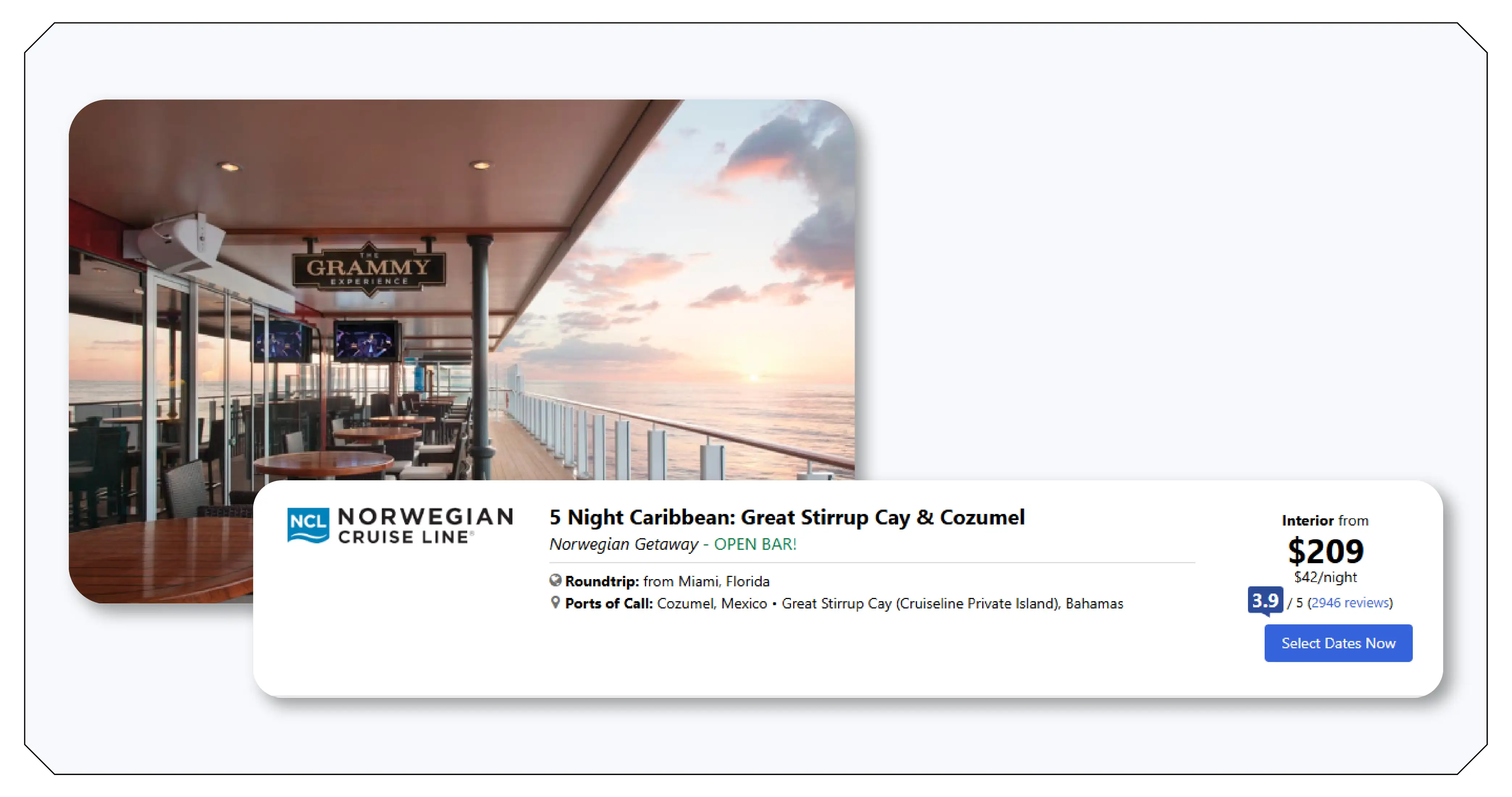
A Cruise Line Customer and Itinerary Dataset provides detailed information about passengers, bookings, and travel schedules. This dataset typically includes cruise dates, destinations, cabin categories, passenger demographics, and onboard activity preferences. For cruise operators, analyzing this data is crucial for improving service delivery, customizing marketing campaigns, and predicting future travel trends.
By understanding customer behavior through these datasets, cruise lines can offer personalized itineraries, identify high-demand routes, and optimize pricing strategies. Additionally, travel agencies benefit from this dataset by recommending cruises that match client preferences, thereby increasing conversion rates and customer satisfaction.
The Significance of a Global Cruise Route Dataset
A Global Cruise Route Dataset is essential for analyzing travel patterns and evaluating the competitiveness of different cruise lines. This dataset includes information about ports of call, voyage duration, seasonal route trends, and regional demand. With this information, stakeholders can assess emerging destinations, identify overcrowded routes, and plan operational adjustments to maximize efficiency.
Furthermore, this dataset supports predictive modeling for passenger volumes, enabling cruise companies to allocate resources effectively. By analyzing historical cruise routes, companies can anticipate peak travel periods, optimize onboard staffing, and design promotional campaigns tailored to specific destinations.
Leveraging the Global Cruise Line Dataset for Market Analysis
The Global Cruise Line Dataset for Market Analysis offers an extensive view of cruise operators worldwide, including fleet size, vessel capacities, itineraries, and market positioning. Analysts and travel planners use this data to compare cruise lines, benchmark performance, and identify opportunities for expansion or collaboration.
Market analysts can also evaluate customer segmentation and pricing models, enabling data-driven decisions for product offerings and route planning. This dataset is a valuable asset for investors seeking insights into the cruise industry’s financial health, competitive landscape, and growth potential.
Exploring the Global Ferry Route Dataset
A Global Ferry Route Dataset complements cruise line data by providing insights into shorter, regional travel services that connect ports and coastal cities. This dataset includes ferry schedules, passenger capacities, seasonal operations, and route frequency. By integrating cruise and ferry datasets, companies can develop comprehensive travel solutions for multi-leg journeys.
Travel agencies and tour operators benefit from combining cruise and ferry datasets, as it enables them to offer seamless itineraries for passengers traveling across different modes of water transport. Additionally, this integration supports the creation of advanced travel packages that cater to diverse traveler needs, enhancing overall customer satisfaction.
The Role of Cruise Line Customer Dataset
The Cruise Line Customer Dataset focuses specifically on passenger-related information such as demographics, travel frequency, booking history, and onboard preferences. By analyzing this dataset, cruise operators can personalize marketing campaigns, tailor onboard experiences, and increase customer loyalty.
Moreover, understanding customer behavior allows for predictive analytics in areas such as cabin demand forecasting, activity planning, and targeted promotions. Travel technology providers often use these datasets to develop AI-driven recommendation engines, ensuring travelers receive offers aligned with their preferences.
Harnessing Cruise and Ferry Data Intelligence
Cruise and Ferry Data Intelligence involves aggregating and analyzing datasets to extract actionable insights. Through intelligence tools, cruise operators can monitor competitor routes, evaluate market trends, and optimize operational efficiency. Real-time analytics from these datasets enable proactive decision-making, allowing cruise lines to respond to changing passenger demands and route conditions swiftly.
This intelligence is particularly valuable during peak travel seasons, helping companies adjust itineraries, manage port logistics, and maintain customer satisfaction. By leveraging intelligent data insights, operators can also improve pricing strategies, promotional offers, and onboard service experiences.
How Cruise Data Aggregation and Market Intelligence Drives Growth?
Cruise Data Aggregation and Market Intelligence refers to the systematic collection and analysis of cruise-related information from multiple sources. Aggregated data helps cruise lines identify profitable routes, evaluate emerging markets, and forecast passenger trends. It also supports strategic planning for fleet deployment, marketing campaigns, and partnership opportunities.
Data aggregation enables operators to consolidate insights from public schedules, booking platforms, and customer interactions, creating a unified view of market dynamics. By leveraging these insights, companies can enhance decision-making, minimize operational risks, and deliver superior travel experiences.
Best Practices for Cruise Line Itinerary Dataset Scraping
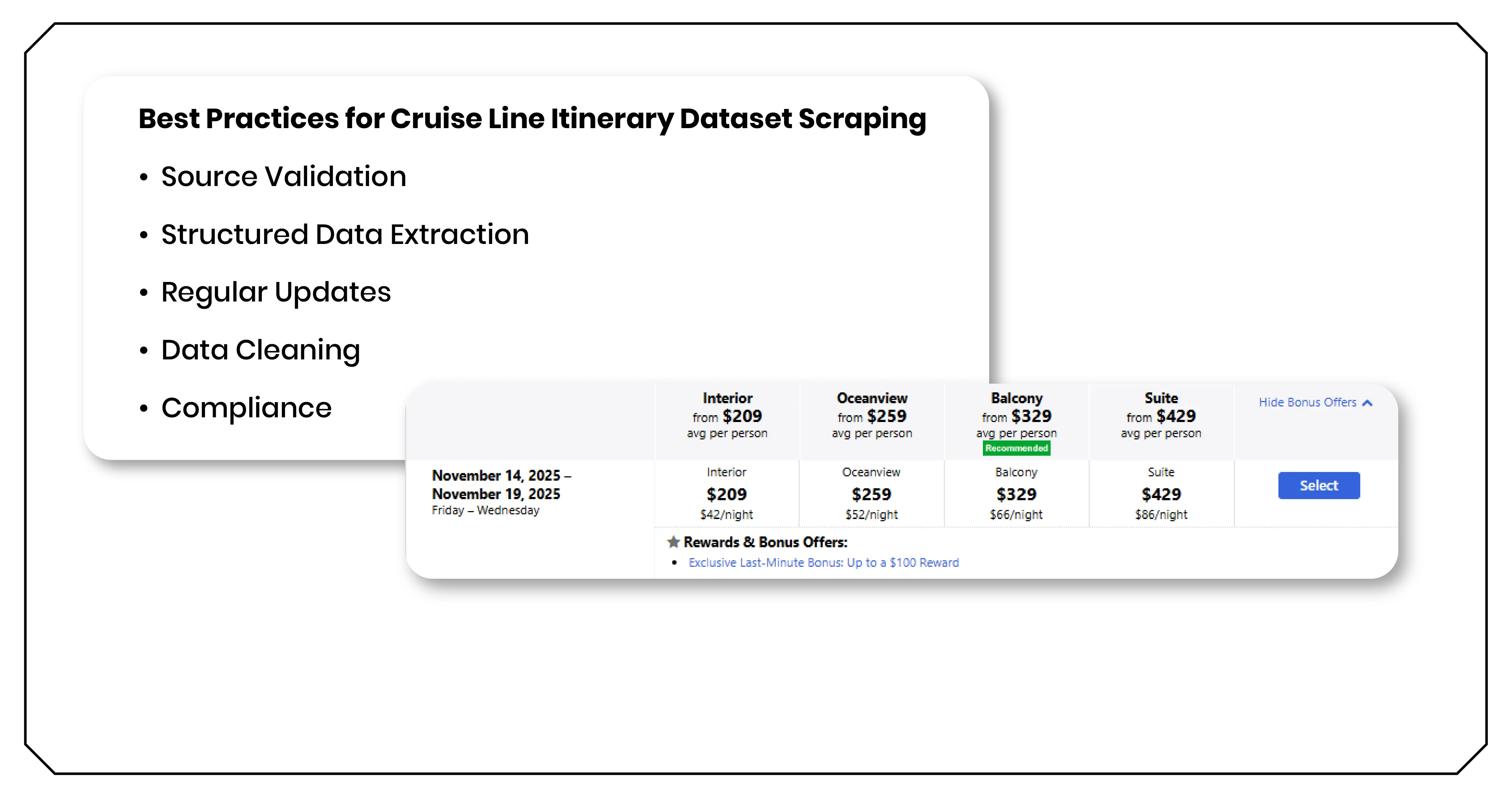
Effective Cruise Line Itinerary Dataset Scraping requires adherence to best practices to ensure accuracy, efficiency, and compliance. Key considerations include:
- Source Validation: Scrape only reliable and legally accessible data sources.
- Structured Data Extraction: Use automated tools to capture itineraries, port schedules, and customer info in a consistent format.
- Regular Updates: Maintain real-time or periodic updates to reflect changing cruise routes and schedules.
- Data Cleaning: Remove duplicates, errors, and incomplete entries to ensure high-quality datasets.
- Compliance: Ensure scraping practices comply with data privacy laws and platform policies.
By following these practices, cruise operators and analysts can create comprehensive datasets that drive meaningful insights.
The Future of Cruise and Ferry Data Analytics
As the travel industry continues to evolve, Cruise Line Itinerary Dataset Scraping will play an increasingly vital role. Future trends include predictive analytics for route planning, AI-driven customer segmentation, and integrated dashboards that visualize market insights. Combining cruise and ferry datasets will allow travel companies to create multi-modal travel packages, improve service delivery, and boost revenue.
Advanced analytics will also enable sustainable tourism by identifying environmentally friendly routes, reducing port congestion, and optimizing fuel consumption. In essence, data intelligence is transforming how cruise lines plan, operate, and interact with customers.
How Travel Scrape Can Help You?
- Comprehensive Cruise & Ferry Insights: Gain access to detailed datasets covering cruise itineraries, ferry routes, passenger demographics, and travel schedules for smarter business decisions.
- Optimized Route and Market Analysis: Analyze global cruise and ferry routes to identify high-demand destinations, emerging travel trends, and profitable market opportunities.
- Enhanced Customer Understanding: Leverage customer and itinerary datasets to segment travelers, personalize offers, and improve onboard experiences for higher satisfaction and loyalty.
- Automated Data Collection: Save time and reduce manual efforts with advanced scraping tools that deliver structured, up-to-date travel data in real-time.
- Strategic Decision-Making Support: Use aggregated datasets and market intelligence to inform pricing, promotional campaigns, route planning, and operational efficiency.
Conclusion
For cruise operators and market analysts, the ability to Scrape Global cruise route and schedule is crucial for gaining a competitive edge. By using advanced Cruise itinerary data aggregation tools, companies can streamline the collection of itinerary and passenger datasets, creating actionable insights for strategic decisions.
Moreover, Custom Travel Data Solutions provide tailored datasets and analytics for specific business needs, supporting market research, customer engagement, and route optimization. Embracing these solutions ensures that travel companies remain agile, data-informed, and customer-focused in an increasingly competitive global cruise market.
Ready to elevate your travel business with cutting-edge data insights? Scrape Aggregated Flight Fares to identify competitive rates and optimize your revenue strategies efficiently. Discover emerging opportunities with tools to Extract Travel Website Dat a, leveraging comprehensive data to forecast market shifts and enhance your service offerings. Real-Time Travel App Data Scraping Services helps stay ahead of competitors, gaining instant insights into bookings, promotions, and customer behavior across multiple platforms. Get in touch with Travel Scrape today to explore how our end-to-end data solutions can uncover new revenue streams, enhance your offerings, and strengthen your competitive edge in the travel market.