.webp "Christmas")
.webp "Christmas")
What Do Economy Class Airfare Insights 2025 Reveal About Modern Airline Pricing?
Introduction
Understanding how airfare pricing works has always been a complex challenge for travelers, airlines, and travel industry analysts. In 2025, airfare structures have become even more dynamic due to fluctuating travel demand, fuel surcharges, competitor pricing, and algorithm-driven yield management systems. To decode how and why ticket prices change, one must explore the underlying fare codes that define restrictions, flexibility, and final price outcomes. These alphabetical fare codes—G, K, L, M, S, V, B, H, Y—play a critical role in shaping the cost of an economy class ticket, often without passengers realizing it. This blog explores how these codes influence pricing decisions and what insights aviation analysts and data-driven businesses can derive from them.
In the rapidly evolving aviation market, economy class airfare insights 2025 help organizations understand how airline pricing models are shifting and how consumers can better navigate cost fluctuations. This deeper understanding is enhanced significantly when supported through Airline Data Scraping Services, which enable real-time monitoring and analytics across multiple booking platforms. For businesses, travel agencies, and market analysts, this level of transparency provides strategic advantages in sales forecasting, competitor comparisons, and route planning optimization—all driven by structured economy class fare code analysis.
What Are Economy Fare Codes and Why Do They Matter?
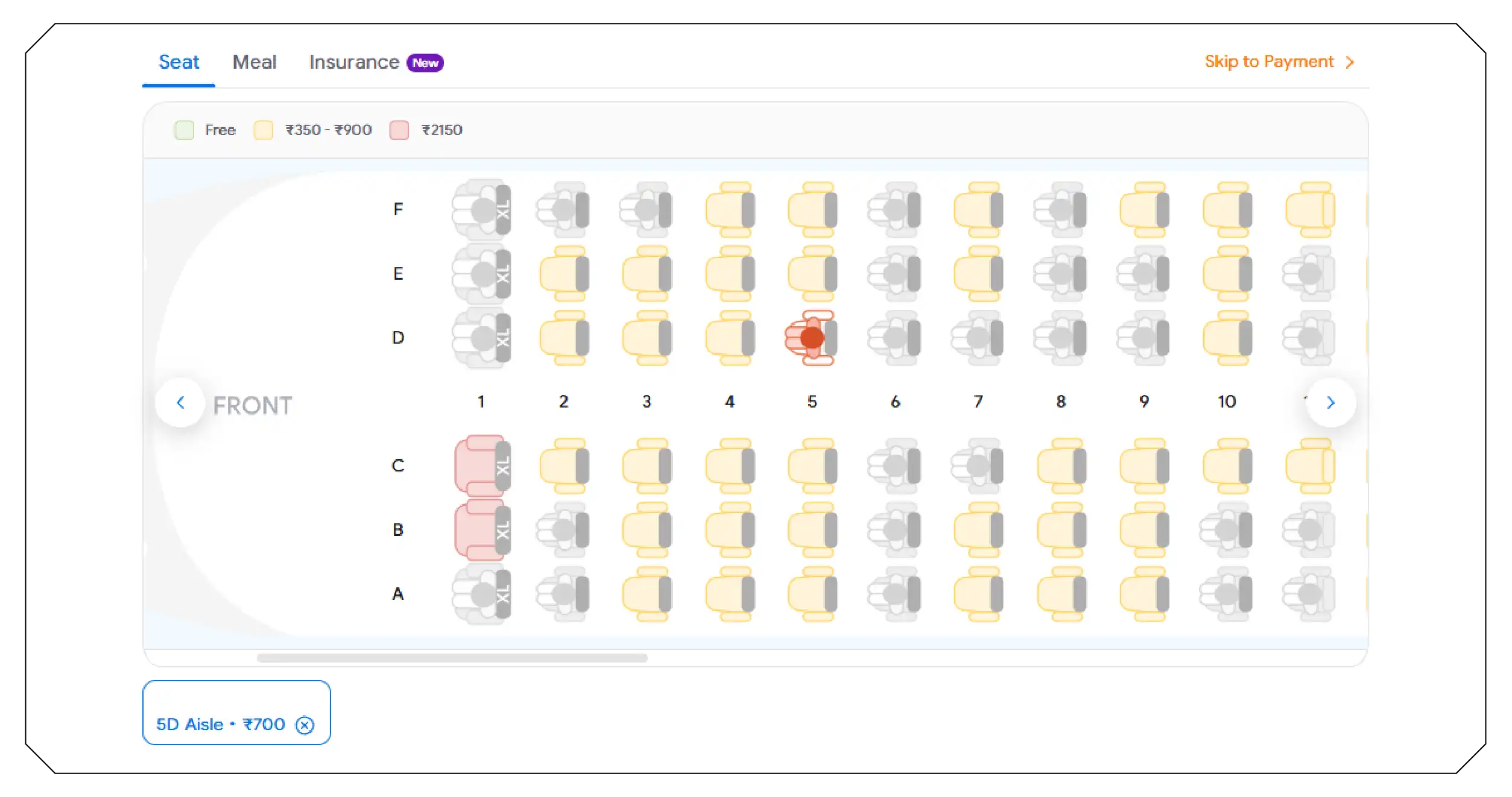
When booking a flight, passengers usually see economy class presented as a single category. However, airlines internally divide economy class into subcategories based on fare codes—letters assigned to each seat type according to its refundability, flexibility, upgrade potential, and seat availability. These codes dictate whether a ticket is discounted, fully flexible, partially refundable, or eligible for loyalty points.
For example:
- Y is typically the highest economy fare class offering maximum flexibility.
- B, H, M are often semi-flexible categories.
- V, S, K, L, G usually represent reduced-price seats with restrictions.
Each code carries revenue implications, allowing airlines to optimize profitability. As demand changes, airlines shift seat availability across categories, causing price swings even within the same cabin. The ability to analyze this data offers immense power to travel firms and aviation strategists.
How Fare Codes G, K, L, M, S, V, B, H, Y Influence Pricing Models?
1. Fare Code Y – Full Flex Economy
Y-class is the most expensive economy ticket, providing maximum flexibility, full refund options, priority waitlisting, and higher mileage accrual. This fare type targets business travelers and last-minute bookings where seat availability is crucial.
2. Fare Codes B and H – Semi-Flexible Seat Pricing
B and H classes offer relatively flexible pricing but at lower costs than Y-class. These are popular choices for corporate and premium economy downgrade travelers. Airlines often use these classes to maintain profit margins while still offering near-flexible benefits.
3. Fare Classes M and S – Mid-Range, Volume-Driven Pricing
M and S fare categories serve route optimization strategies. Airlines adjust pricing based on expected demand, competitor routes, and seasonal fluctuations. Companies analyzing Airline Price Change Dataset gain strategic insight into seasonal travel cycles.
4. Discounted Fare Categories V, K, L, G
These economy categories typically target budget travelers. Seats in these classes are restricted, often non-refundable, and cannot be upgraded. These codes appear frequently on low-cost carriers and during promotional cycles. Businesses monitoring booking fluctuations can Scrape airfare booking class trends to forecast pricing dips and peak travel windows.
Why Airlines Use Fare Code Segmentation?
Fare segmentation allows airlines to maximize aircraft revenue with precision. Instead of selling economy seats at a single price, selling multiple fare classes enables airlines to adjust prices continually while responding to consumer behavior. The role of Flight Price Data Intelligence has expanded tremendously in 2025 as airlines increasingly rely on advanced algorithms to predict travel behavior based on booking history, route performance, and macroeconomic data.
This strategy not only improves profitability but also supports dynamic discounting, seasonal pricing, route testing, and competitive benchmarking. It’s no longer enough to examine ticket prices alone; travel analysts must study structured pricing datasets and scraped fare code pricing trends to understand where markets are heading.
How Data Scraping Helps Decode Fare Class Pricing Logic?
Fare code pricing varies widely across OTAs, airline websites, and regional inventory management systems. Gaining transparency requires automated extraction of aviation datasets such as seat availability, pricing for each fare code, and route-specific trends. Businesses, aviation analysts, and research firms extract structured datasets from a Global Flight Price Trends Dataset to improve strategy formulation and pricing predictions.
For example:
- Travel platforms compare multiple routes across airlines.
- Corporate travel planners track discount cycles.
- Aviation consultants forecast post-pandemic travel recovery patterns.
- Pricing analysts extract economy class ticket pricing Data to evaluate revenue projections.
Using automated tools ensures that pricing decisions are supported by real-time market evidence rather than assumptions.
Key Benefits of Fare Code Intelligence for Businesses
1. Competitive Flight Pricing Strategy
Access to fare class data allows airlines and travel agencies to stay competitive.
2. Predictive Revenue and Demand Analysis
Historical datasets improve demand forecasting models.
3. Route Profitability Analysis
Economy seat inventory allocation determines how profitable a route becomes.
4. Customer Experience Optimization
Predicting traveler priorities enhances loyalty program strategies.
5. OTA and Meta Search Optimization
Search and comparison platforms improve search ranking logic and algorithm relevance.
Aviation companies that monitor real-time pricing signals from different fare classes unlock adaptive pricing and smarter yield management opportunities.
Future Outlook for Fare Class Pricing in 2025 and Beyond
Airfare pricing will continue to depend heavily on predictive analytics, AI-driven fleet optimization, and inventory segmentation. Travelers will increasingly shop based on value-added benefits rather than base fares alone. Automated systems tracking flight pricing in real time will become standard across digital travel ecosystems.
Airlines will leverage machine learning models to predict booking patterns more accurately while travel-tech companies will increase reliance on structured aviation data extraction. Analysts who embrace automated comparison intelligence and deeper fare code analysis will gain significant competitive advantage.
How Travel Scrape Can Help You?
1. Real-Time Pricing Intelligence
Our data scraping services deliver real-time airfare pricing insights, helping businesses monitor fluctuating fares and optimize revenue strategies with accurate, timely competitive intelligence.
2. Structured Airfare Dataset Extraction
We extract structured airfare datasets across airlines, OTAs, and routes, enabling travel agencies to forecast demand, analyze booking patterns, and execute targeted, data-driven marketing strategies.
3. Fare Code Pricing Analysis
Automated tools capture fare code-level pricing, availability, and seasonal movement trends, empowering aviation analysts to build predictive models and evaluate route profitability efficiently.
4. Multi-Platform Competitive Comparison
We aggregate flight pricing from multiple sources, improving pricing comparison accuracy, enhancing customer booking experiences, increasing conversion rates, and strengthening competitive positioning.
5. Advanced Dashboards & API Integration
We offer custom dashboards and API access for flight data intelligence, enabling visualization of patterns, anomaly detection, and transparency through automation-powered analytics.
Conclusion
The alphabet codes behind economy class airfare reflect more than seat type—they reveal evolving market patterns, revenue strategies, and industry-wide pricing intelligence. As 2025 accelerates demand for transparency, businesses adopting real-time Scrape airfare code comparison can unlock a clearer view of changing travel economics. Leveraging economy class travel trends Scraping and automated flight price data insight tools enables stronger forecasting and greater customer value. Travel platforms that Scrape OTA Flight Prices can better communicate savings and enhance decision-making for both businesses and travelers.
Ready to elevate your travel business with cutting-edge data insights? Scrape Aggregated Flight Fares to identify competitive rates and optimize your revenue strategies efficiently. Discover emerging opportunities with tools to Extract Travel Website Data, leveraging comprehensive data to forecast market shifts and enhance your service offerings. Real-Time Travel App Data Scraping Services helps stay ahead of competitors, gaining instant insights into bookings, promotions, and customer behavior across multiple platforms. Get in touch with Travel Scrape today to explore how our end-to-end data solutions can uncover new revenue streams, enhance your offerings, and strengthen your competitive edge in the travel market.