.webp "Christmas")
.webp "Christmas")
How Can You Extract Factors Cruisers Reviews Data to Improve Passenger Experience?
Introduction
In the competitive cruise industry, understanding passenger sentiment is essential for improving services, enhancing experiences, and driving bookings. Companies and travel analysts can Extract Factors Cruisers Reviews Data to uncover what travelers value most, including cabin comfort, dining quality, onboard excursions, and overall pricing satisfaction. By utilizing Cruise Scraping Services, businesses can systematically gather and analyze feedback from numerous review platforms, identifying recurring trends, common complaints, and potential areas for improvement. Advanced scraping techniques enable the extraction of detailed insights, allowing operators to Extract cruise experience review Data from unstructured reviews and convert it into structured, actionable intelligence. This data-driven approach supports operational enhancements, informed decision-making, and strategic planning, enabling cruise lines to respond proactively to passenger needs. Ultimately, leveraging cruise review analytics helps companies refine service offerings, optimize itineraries, and maintain a competitive edge in a fast-evolving market where passenger expectations continue to rise.
Why Cruise Review Data Matters?
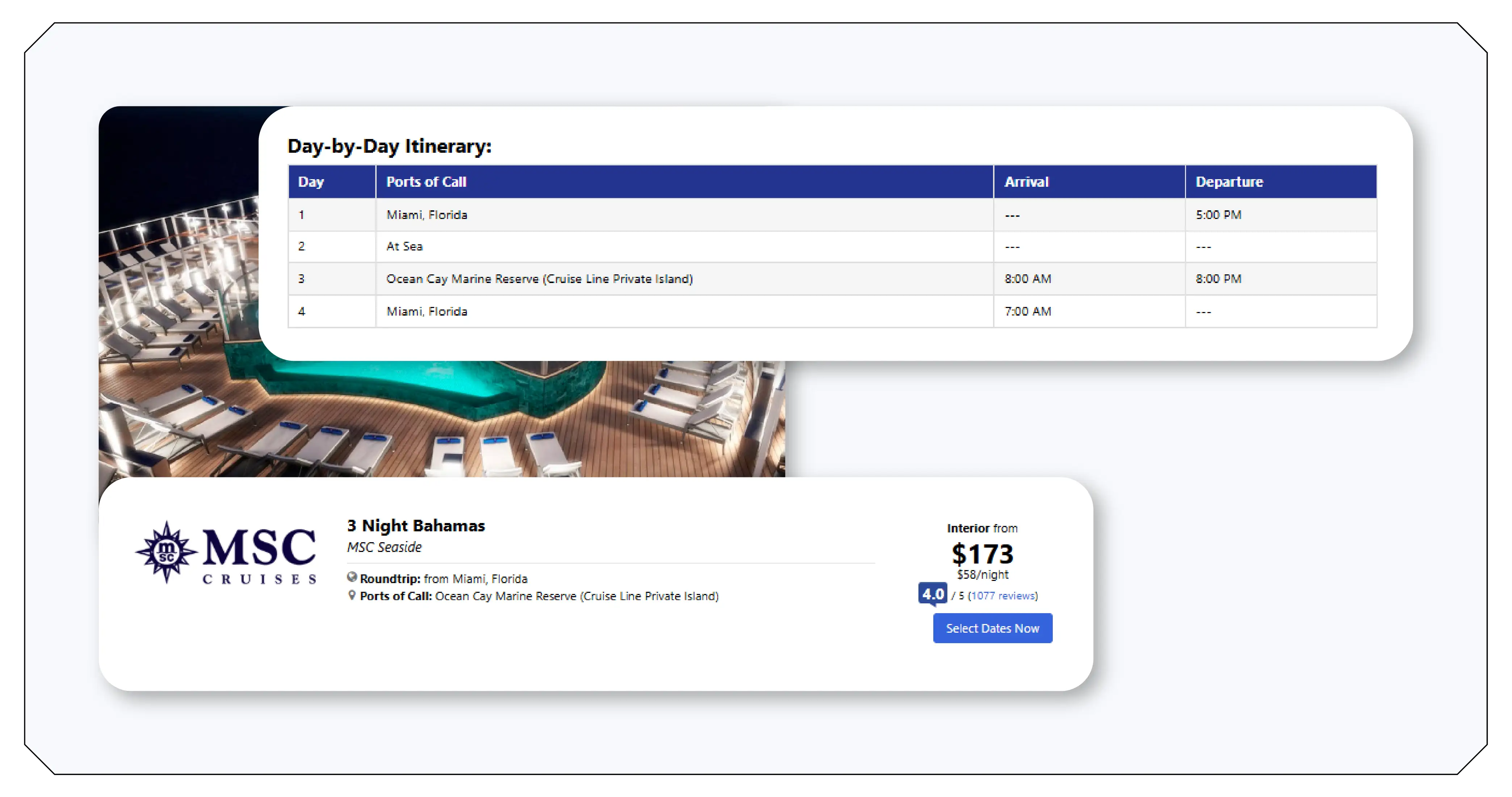
Cruise passengers share detailed feedback online about their journeys, including cabin cleanliness, dining quality, staff service, entertainment options, shore excursions, and pricing perceptions. Analyzing these reviews at scale provides insights that no single survey or feedback form can achieve. By using Global Cruise Route Dataset and integrating review data, companies can evaluate route popularity, passenger satisfaction per destination, and seasonal patterns.
Cruise lines can identify which aspects of the travel experience contribute most to positive reviews and loyalty. Moreover, understanding negative feedback helps pinpoint service gaps and operational inefficiencies.
Key Factors Extracted from Cruiser Reviews
Cabins
Passengers frequently comment on cabin size, layout, comfort, view, amenities, and housekeeping. Collecting cabin-related feedback through methods to Scrape cruise cabin review trends enables cruise operators to assess the impact of cabin quality on overall satisfaction. By identifying cabins or ship sections associated with lower ratings, cruise companies can prioritize renovations or adjust pricing to reflect perceived value.
Data-driven insights into cabin preferences also assist in optimizing bookings. For example, reviews might reveal that families prefer interconnecting rooms, whereas solo travelers value affordability and privacy. Structured cabin review data helps cruise marketers refine promotional campaigns targeting these segments.
Dining
Onboard dining is another major determinant of passenger satisfaction. Guests comment on food quality, variety, service speed, dining hours, specialty restaurants, and dietary accommodations. Using methods to Extract cruise dining experience reviews, cruise operators can pinpoint menus, dishes, or service protocols that delight passengers versus those generating complaints.
Analyzing trends across multiple ships and itineraries helps optimize culinary offerings. Cruise lines can enhance guest experiences by incorporating popular dishes, improving dietary options, or expanding reservation flexibility. Additionally, review analysis allows operators to measure staff performance in dining areas, ensuring consistent service standards.
Excursions and Destinations
Shore excursions and destination experiences often dominate passenger reviews. Feedback typically covers tour quality, local guides, transportation, timing, and value for money. By conducting cruise destination tour review Scraping, cruise companies can assess which excursions meet expectations and which need adjustments.
Insights from excursion reviews assist in route planning, pricing strategies, and partnerships with local tour operators. Popular destinations may be promoted more aggressively, while underperforming tours can be replaced or improved. Coupled with data from the Global Cruise Route Dataset, excursion feedback enables a holistic view of passenger preferences and route profitability.
Pricing and Value Perception
Pricing remains a recurring topic in reviews, with passengers frequently discussing ticket value, promotions, hidden fees, and perceived fairness. Aggregating these mentions via Cruise Pricing Intelligence allows cruise operators to benchmark prices against competitors, adjust package offerings, and enhance perceived value.
Data-driven pricing strategies based on passenger sentiment can improve occupancy rates, encourage repeat bookings, and strengthen brand reputation. Combining pricing reviews with cabin and dining feedback provides a comprehensive understanding of what drives satisfaction versus complaints.
How Scraping Cruise Reviews Helps Businesses?
1. Data Consolidation
Cruise review data is scattered across multiple platforms, including TripAdvisor, CruiseCritic, and individual cruise line websites. Scrape Cruise Reviews to consolidate this information into structured datasets, making it easier to analyze patterns, trends, and correlations.
2. Trend Analysis
Advanced review analytics enable businesses to track emerging trends, such as increasing demand for luxury cabins, specialized dining experiences, or new excursion types. By identifying what matters most to passengers, operators can align services with evolving preferences.
3. Competitive Benchmarking
By aggregating reviews across different cruise lines, companies can identify strengths and weaknesses relative to competitors. This allows for strategic investments, such as upgrading cabins, enhancing onboard entertainment, or adjusting pricing models to remain competitive.
4. Customer-Centric Decision Making
Data-driven insights derived from passenger feedback ensure decisions are guided by actual customer experiences rather than assumptions. Cruise operators can optimize marketing, itinerary planning, and onboard services based on real-world data.
Implementing Cruise Review Data Scraping
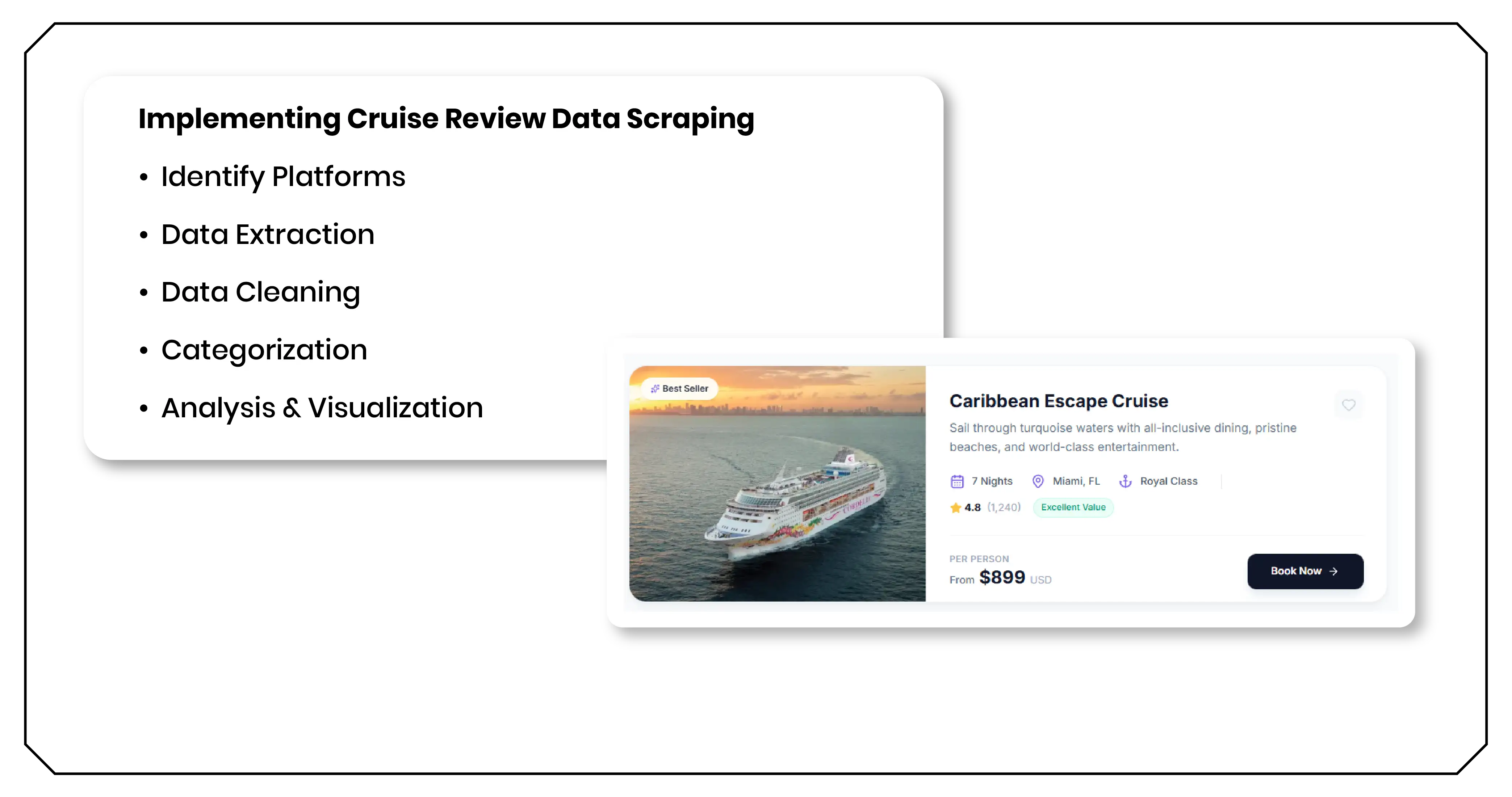
Implementing an effective cruise review data scraping strategy involves several steps:
- Identify Platforms: Determine the major review sites and cruise line portals where passengers leave feedback.
- Data Extraction: Use scraping tools to systematically collect review text, ratings, timestamps, and metadata.
- 3. Data Cleaning: Remove duplicates, irrelevant entries, and standardize formatting for analysis.
- 4. Categorization: Segment reviews by cabins, dining, excursions, and pricing mentions
- 5. Analysis & Visualization: Apply sentiment analysis, trend detection, and reporting dashboards for actionable insights.
Such methods allow cruise companies to continuously monitor passenger sentiment across multiple cruises, destinations, and time periods.
How Travel Scrape Can Help You?
1. Comprehensive Insights
Collect structured data from cruise reviews, cabins, dining, excursions, and pricing to inform business decisions.
2. Save Time & Effort
Automate data extraction across multiple review platforms, eliminating manual research and speeding up analysis.
3. Customizable & Scalable Solutions
Tailor scraping services to specific cruise lines, routes, and review platforms, handling large-scale datasets efficiently.
4. Actionable Analytics
Deliver clean, ready-to-use datasets for trend analysis, sentiment evaluation, and competitive benchmarking.
5. Enhanced Customer Experience
Identify pain points and strengths in cabins, dining, excursions, and pricing to optimize passenger satisfaction.
Conclusion
Understanding the factors cruisers discuss in their reviews is essential for delivering superior guest experiences, optimizing operations, and improving revenue performance. Structured data on cabins, dining, excursions, and pricing provides cruise operators with actionable insights to refine services, enhance offerings, and remain competitive. Advanced Real Time Cruise price data scraping ensures operators track passenger perceptions of value, while web scraping cruise pricing complaints highlights areas for improvement. Integrating review analysis with itinerary data allows businesses to Scrape Cruise Route And Price effectively, supporting both operational excellence and strategic planning.
By leveraging comprehensive cruise scraping services, operators can transform unstructured reviews into meaningful insights that drive decision-making, enhance customer satisfaction, and strengthen market positioning in the global cruise industry.
Ready to elevate your travel business with cutting-edge data insights? Scrape Aggregated Flight Fares to identify competitive rates and optimize your revenue strategies efficiently. Discover emerging opportunities with tools to Extract Travel Website Data, leveraging comprehensive data to forecast market shifts and enhance your service offerings. Real-Time Travel App Data Scraping Services helps stay ahead of competitors, gaining instant insights into bookings, promotions, and customer behavior across multiple platforms. Get in touch with Travel Scrape today to explore how our end-to-end data solutions can uncover new revenue streams, enhance your offerings, and strengthen your competitive edge in the travel market.