.webp "Christmas")
.webp "Christmas")
Improving Route Planning with Cruise Itinerary & Cabin Price Scraping
Introduction
The client, a leading travel operator, approached us to optimize their cruise offerings and pricing strategies. Using Cruise Itinerary & Cabin Price Scraping, we collected detailed information on cruise schedules, cabin categories, fare structures, and seasonal promotions across multiple cruise lines. This enabled the client to understand market trends, demand patterns, and competitive positioning.
The client, a leading travel operator, approached us to optimize their cruise offerings and pricing strategies. Using Cruise Itinerary & Cabin Price Scraping, we collected detailed information on cruise schedules, cabin categories, fare structures, and seasonal promotions across multiple cruise lines. This enabled the client to understand market trends, demand patterns, and competitive positioning.
Additionally, integrating the Global Cruise Route Dataset helped uncover emerging trends in international cruise travel and evaluate route popularity across different regions. The actionable insights empowered the client to enhance revenue management, improve itinerary planning, and strengthen competitiveness.
Ultimately, the project resulted in better occupancy rates, optimized pricing strategies, and increased overall profitability, demonstrating the value of data-driven intelligence in the cruise industry.
The Client
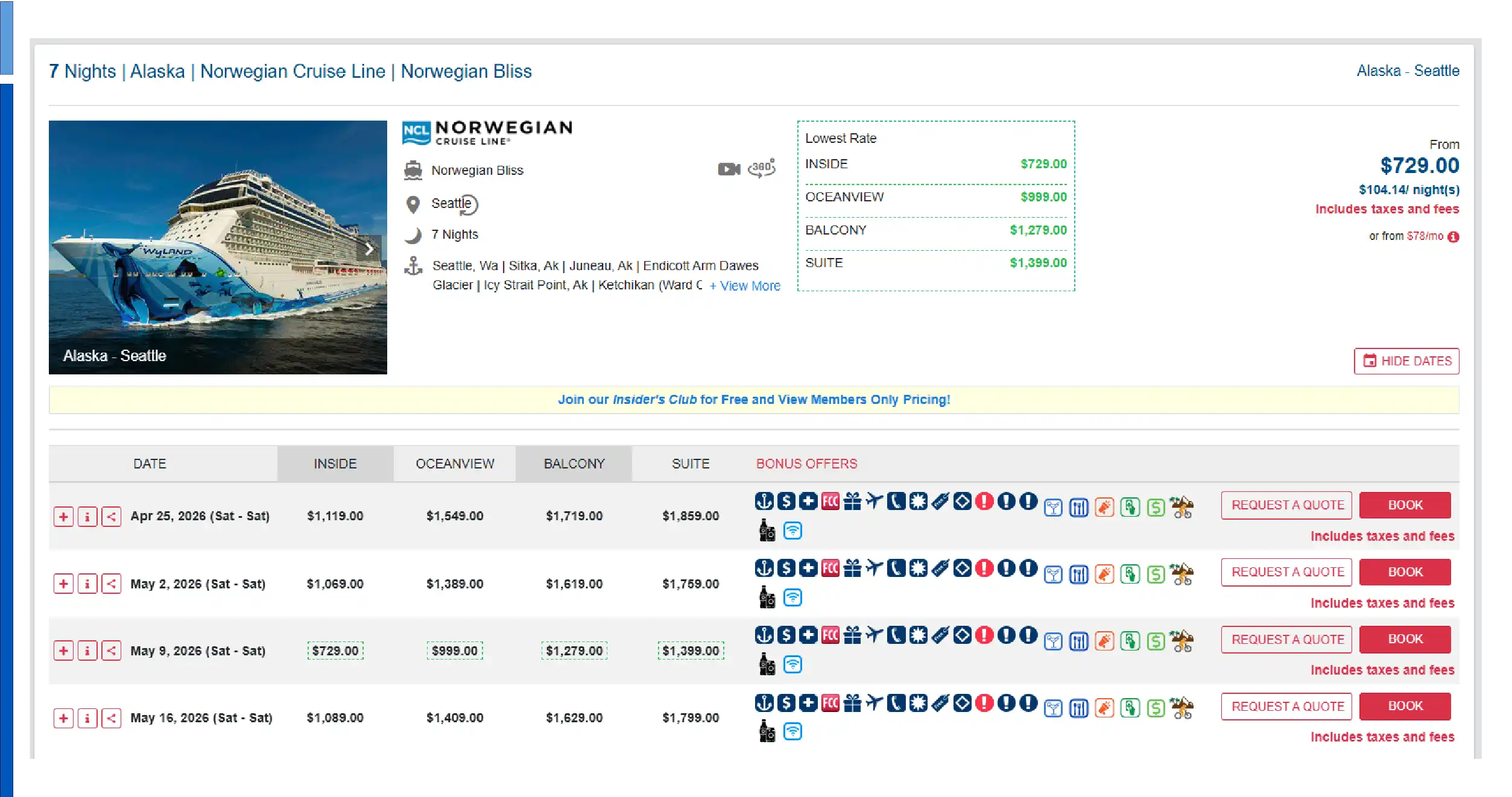
Our client is a prominent travel operator specializing in luxury and international cruise experiences. They aimed to optimize their offerings, improve pricing strategies, and enhance passenger satisfaction across multiple routes. By leveraging cruise cabin price intelligence, the client gained a deep understanding of cabin-level pricing trends, seasonal fare fluctuations, and competitive pricing strategies across leading cruise lines.
To strengthen their market positioning, they invested in international cruise data analysis, enabling them to monitor route popularity, passenger demand, and itinerary performance across global destinations. This allowed the client to tailor their offerings, target high-demand segments, and identify opportunities for new or enhanced cruise experiences.
Additionally, using Cruise & Ferry Data Scraping Services, they were able to continuously collect real-time data on itineraries, ports, and fare changes, ensuring agile decision-making and optimized revenue management.
These initiatives empowered the client to enhance profitability, operational efficiency, and customer satisfaction, establishing a data-driven foundation for strategic growth.
Challenges in the Travel Industry
The client faced several challenges in optimizing cruise operations, pricing strategies, and passenger satisfaction. They needed accurate, real-time insights into itineraries, cabin availability, fares, and customer feedback. Leveraging web scraping cruise booking data helped address these gaps effectively.
- Dynamic Pricing Fluctuations
Frequent changes in cabin prices made revenue forecasting complex. Using cruise availability data extraction, the client could track real-time fare variations, adjust pricing dynamically, and maintain competitiveness across multiple cruise lines. - Limited Market Visibility
Monitoring competitor itineraries and services was challenging. By employing Scrape cruise cabin price comparison, the client gained insights into market trends, allowing strategic adjustments in route offerings and promotional campaigns. - Customer Sentiment Analysis
Understanding passenger preferences and complaints was difficult. Cruise Pricing Intelligence enabled structured analysis of reviews, feedback, and ratings, helping improve onboard services and enhance the overall travel experience. - Route Optimization Challenges
Identifying high-demand itineraries required robust data analysis. Insights from Extract Factors Cruisers Reviews Data allowed prioritization of popular routes, optimizing scheduling and enhancing profitability. - Data Volume and Accuracy
Managing large volumes of scattered booking and pricing information was complex. Consolidation, validation, and automated updates ensured reliable datasets for informed decision-making and strategic planning.
Our Approach
- Comprehensive Data Collection: We gathered information from multiple sources including booking platforms, cruise line websites, and travel portals. This ensured complete coverage of itineraries, cabin availability, and fare structures, providing a reliable foundation for detailed analysis and actionable insights.
- Advanced Analytical Techniques: Our team applied statistical modeling and predictive analytics to identify patterns, trends, and anomalies. This enabled accurate demand forecasting, pricing optimization, and route performance evaluation, supporting strategic decision-making for operational and financial efficiency.
- Competitive Benchmarking: We evaluated competitor offerings, route schedules, and pricing strategies to understand market dynamics. These insights helped the client identify gaps, benchmark performance, and enhance service differentiation, ensuring stronger positioning in the cruise travel market.
- Visualization & Reporting: Collected data was transformed into interactive dashboards and visual reports. Decision-makers could quickly interpret trends, monitor performance metrics, and respond proactively to market changes, enabling faster and informed business decisions.
- Strategic Recommendations: Based on insights derived, we provided actionable recommendations for itinerary planning, pricing strategies, and passenger experience improvements, helping the client achieve operational excellence, maximize revenue, and strengthen market competitiveness.
Results Achieved
The project delivered measurable improvements in cruise operations, pricing strategies, and passenger satisfaction, enabling the client to make informed, data-driven decisions efficiently.
- Optimized Occupancy Rates: Enhanced scheduling and fare adjustments increased cabin occupancy across peak and off-peak cruises, improving overall revenue without requiring additional marketing efforts.
- Improved On-Time Departures: Analysis of historical delays allowed proactive itinerary adjustments, reducing cancellations and enhancing passenger satisfaction consistently across multiple cruise routes.
- Revenue Maximization: Dynamic fare strategies based on collected data helped the client maximize revenue per voyage while remaining competitive in the global cruise market.
- Enhanced Market Positioning: Benchmarking competitor itineraries and services allowed the client to differentiate offerings and strengthen their position in an increasingly competitive cruise industry.
- Actionable Insights for Strategic Planning: Interactive dashboards provided clear insights into passenger trends, route popularity, and fare performance, supporting faster decision-making and route optimization.
Sample Cruise Performance Table:
| Cruise Route | Average Occupancy (%) | On-Time Departure (%) | Average Fare (USD) | Peak Travel Month |
|---|---|---|---|---|
| Caribbean – Bahamas | 92 | 95 | $450 | December |
| Mediterranean – Italy | 88 | 92 | $520 | August |
| Alaska – Glacier Bay | 85 | 90 | $610 | June |
| South Pacific – Fiji | 89 | 93 | $480 | July |
| Northern Europe – Norway | 83 | 88 | $530 | September |
| Caribbean – Mexico | 90 | 94 | $460 | November |
| Mediterranean – Greece | 87 | 91 | $500 | May |
| Alaska – Inside Passage | 84 | 89 | $600 | July |
Client’s Testimonial
"Working with the team on our cruise itinerary and cabin pricing project has been transformative. Their data-driven approach provided detailed insights into occupancy trends, fare strategies, and competitor offerings. The dashboards and visual reports allowed us to quickly identify high-demand routes, optimize scheduling, and maximize revenue. Their professionalism, expertise, and timely delivery exceeded expectations. Thanks to their support, we improved on-time departures, enhanced passenger satisfaction, and strengthened our market positioning. The actionable recommendations provided a clear roadmap for growth, making this collaboration invaluable for our cruise operations and strategic planning."
Conclusion
The project successfully empowered the client to optimize cruise operations, enhance revenue management, and improve passenger satisfaction across multiple routes. By leveraging insights from Cruise Line Itinerary Dataset Scraping, the client identified high-demand itineraries, peak travel periods, and pricing opportunities. It enabled competitive benchmarking and informed pricing strategies across different cruise lines.
Additionally, employing Extract Travel Website Data provided real-time visibility into itinerary changes, fare fluctuations, and customer preferences, allowing agile decision-making and proactive adjustments. The implementation of a Scrape Travel Mobile App ensured continuous monitoring of traveler trends and emerging market demands.
Overall, these data-driven strategies improved occupancy rates, optimized scheduling, strengthened market positioning, and increased overall profitability, demonstrating the tangible value of comprehensive travel intelligence for cruise operators.